Campus Ready
Campus Ready
AI-Powered Learning Platform for Educators & Students
AI-Powered Learning Platform for Educators & Students
Campus Ready was an AI-powered learning platform designed to simplify assessment creation and exam preparation. The platform enabled professors to generate question papers from course materials while helping students organize, summarize, and prepare for exams through AI-assisted learning.
This case study focuses on the AI Exam Builder, a feature designed to reduce the time and effort required for professors to create balanced and customizable examinations.
Campus Ready was an AI-powered learning platform designed to simplify assessment creation and exam preparation. The platform enabled professors to generate question papers from course materials while helping students organize, summarize, and prepare for exams through AI-assisted learning.
This case study focuses on the AI Exam Builder, a feature designed to reduce the time and effort required for professors to create balanced and customizable examinations.
View Prototype
View Prototype
Year
Year
2026
2026
Duration
Duration
January 2026 – April 2026
January 2026 – April 2026
Tools
Tools
Figma, FigJam, Jira
Figma, FigJam, Jira
Team
Team
Co-founders, Product Team, Developers, UI/UX Team
Co-founders, Product Team, Developers, UI/UX Team
www.your-website.com
www.your-website.com
www.your-website.com
www.your-website.com

www.your-website.com
www.your-website.com

About the Product
About the Product
Campus Ready began as a comprehensive AI-powered learning platform serving both educators and students.
The platform included AI-powered assessment creation, study assistance, practice tests, and oral examinations. As the product matured, the team identified presentation coaching as a more focused opportunity, eventually evolving the platform into SlideCoach, a dedicated AI presentation coaching product.
Campus Ready began as a comprehensive AI-powered learning platform serving both educators and students.
The platform included AI-powered assessment creation, study assistance, practice tests, and oral examinations. As the product matured, the team identified presentation coaching as a more focused opportunity, eventually evolving the platform into SlideCoach, a dedicated AI presentation coaching product.
My Role
My Role
End-to-End Product Design
End-to-End Product Design
Designed complete user experiences for multiple AI-powered workflows, from concept to high-fidelity interfaces.
Designed complete user experiences for multiple AI-powered workflows, from concept to high-fidelity interfaces.
UX Research & Information Architecture
UX Research & Information Architecture
Mapped user journeys, created information architecture, and structured navigation for educators and students.
Mapped user journeys, created information architecture, and structured navigation for educators and students.
UI Design
UI Design
Designed responsive interfaces, reusable components, and interaction patterns across the platform.
Designed responsive interfaces, reusable components, and interaction patterns across the platform.
AI Workflow Design
AI Workflow Design
Designed AI-assisted experiences including question generation, study assistance, oral assessments, and presentation workflows.
Designed AI-assisted experiences including question generation, study assistance, oral assessments, and presentation workflows.
Cross-functional Collaboration
Cross-functional Collaboration
Worked closely with founders and developers to iterate designs, simplify complex interactions, and adapt solutions based on implementation constraints.
Worked closely with founders and developers to iterate designs, simplify complex interactions, and adapt solutions based on implementation constraints.
Design Iteration
Design Iteration
Continuously refined user flows and interfaces through internal feedback and product discussions.
Continuously refined user flows and interfaces through internal feedback and product discussions.
My Contributions
My Contributions
Product Strategy
Product Strategy
Structured the navigation and feature architecture for multiple AI modules.
Designed scalable user flows across educator and student experiences.
Structured the navigation and feature architecture for multiple AI modules.
Designed scalable user flows across educator and student experiences.
Experience Design
Experience Design
Designed end-to-end workflows for the AI Exam Builder.
Created interfaces for AI-assisted study preparation and oral examinations.
Designed reusable interaction patterns across the platform.
Designed end-to-end workflows for the AI Exam Builder.
Created interfaces for AI-assisted study preparation and oral examinations.
Designed reusable interaction patterns across the platform.
Design System
Design System
Built reusable UI components and standardized layouts.
Maintained consistency across multiple AI experiences.
Built reusable UI components and standardized layouts.
Maintained consistency across multiple AI experiences.
Collaboration
Collaboration
Worked alongside founders and developers throughout implementation.
Balanced user experience goals with technical feasibility in a fast-paced startup environment.
Worked alongside founders and developers throughout implementation.
Balanced user experience goals with technical feasibility in a fast-paced startup environment.
Portfolio Redesign
Portfolio Redesign
The original product was developed within the constraints of an early-stage startup, where the primary focus was validating functionality and shipping features quickly.
For this portfolio, I redesigned the visual interface to improve clarity, hierarchy, and consistency while preserving the original user flows, interactions, and AI-powered functionality. The redesign reflects how I would approach the same product with a stronger emphasis on usability and modern SaaS design principles.
The original product was developed within the constraints of an early-stage startup, where the primary focus was validating functionality and shipping features quickly.
For this portfolio, I redesigned the visual interface to improve clarity, hierarchy, and consistency while preserving the original user flows, interactions, and AI-powered functionality. The redesign reflects how I would approach the same product with a stronger emphasis on usability and modern SaaS design principles.
Why This Case Study?
Why This Case Study?
Why This Case Study?
Why This Case Study?
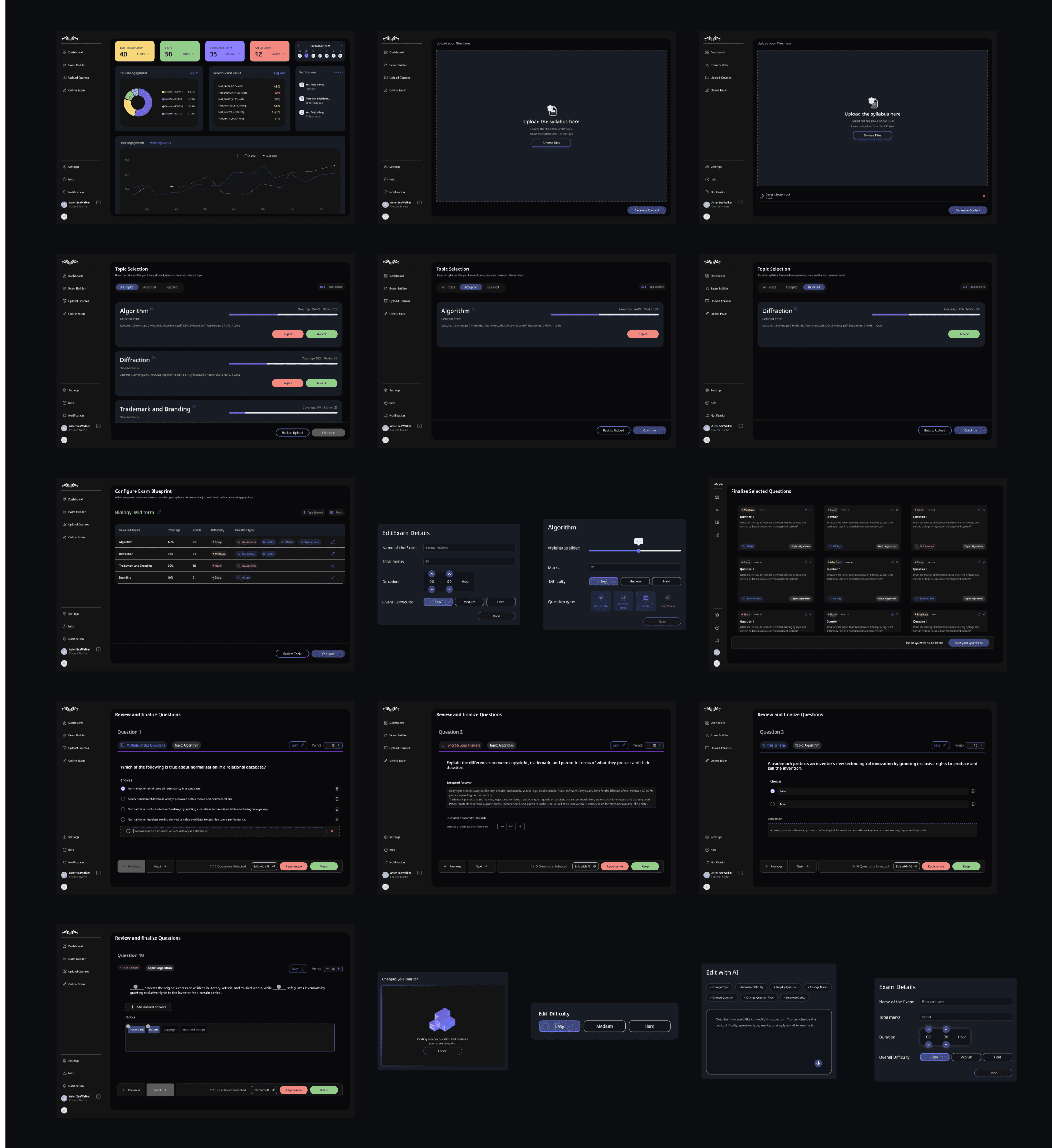
Campus Ready included multiple AI-powered learning experiences for both educators and students. For this portfolio, I chose to highlight the AI Exam Builder, as it demonstrates my approach to designing complex AI-assisted workflows—from document upload and topic extraction to AI-generated question papers with customizable marks, difficulty levels, and question types
Campus Ready included multiple AI-powered learning experiences for both educators and students. For this portfolio, I chose to highlight the AI Exam Builder, as it demonstrates my approach to designing complex AI-assisted workflows—from document upload and topic extraction to AI-generated question papers with customizable marks, difficulty levels, and question types
The Problem
The Problem
Creating a well-balanced examination is a time-consuming process for educators. Professors often work across multiple textbooks, course notes, and reference materials, making it difficult to ensure balanced topic coverage, appropriate mark distribution, and varied question formats.
Traditional question paper creation requires repetitive manual effort, leaving little room for iteration or customization.
Creating a well-balanced examination is a time-consuming process for educators. Professors often work across multiple textbooks, course notes, and reference materials, making it difficult to ensure balanced topic coverage, appropriate mark distribution, and varied question formats.
Traditional question paper creation requires repetitive manual effort, leaving little room for iteration or customization.
RESEARCH
RESEARCH
Understanding the Problem
Understanding the Problem
To better understand the assessment creation process, I conducted secondary research on AI-powered assessment platforms, educator workflows, academic papers, and discussions within teaching communities. The research focused on identifying the biggest challenges professors face while creating balanced examinations, including syllabus coverage, question difficulty, marks allocation, and repetitive manual work.
To better understand the assessment creation process, I conducted secondary research on AI-powered assessment platforms, educator workflows, academic papers, and discussions within teaching communities. The research focused on identifying the biggest challenges professors face while creating balanced examinations, including syllabus coverage, question difficulty, marks allocation, and repetitive manual work.
Teachers spend an average of 265 hours each academic year on assessment-related tasks, and 69% believe the process could be significantly more efficient.
Teachers spend an average of 265 hours each academic year on assessment-related tasks, and 69% believe the process could be significantly more efficient.
Creating an examination is much more than writing questions. Professors must ensure balanced syllabus coverage, distribute marks fairly, maintain appropriate difficulty levels, and review every question for accuracy. These repetitive tasks increase preparation time and make last-minute modifications difficult, creating an opportunity for AI to streamline the workflow while keeping educators in control.
Creating an examination is much more than writing questions. Professors must ensure balanced syllabus coverage, distribute marks fairly, maintain appropriate difficulty levels, and review every question for accuracy. These repetitive tasks increase preparation time and make last-minute modifications difficult, creating an opportunity for AI to streamline the workflow while keeping educators in control.
Key Insights
Key Insights
Professors spend hours preparing and formatting every examination.
Professors spend hours preparing and formatting every examination.
Balancing marks, topics, and difficulty is one of the most time-consuming tasks.
Balancing marks, topics, and difficulty is one of the most time-consuming tasks.
AI should automate repetitive work while allowing complete manual review.
AI should automate repetitive work while allowing complete manual review.
Flexible editing and regeneration are essential for educator trust.
Flexible editing and regeneration are essential for educator trust.
COMPETITIVE ANALYSIS
COMPETITIVE ANALYSIS

Prep AI
Prep AI

Question Well
Question Well

Questgen
Questgen


Strengths
AI generates questions directly from uploaded course material.
Complete control over marks, difficulty, and question types.
Individual question regeneration and AI-assisted editing before export.
Weaknesses
AI-generated content still requires educator verification.
Quality depends on the uploaded teaching material.
Requires onboarding for educators unfamiliar with AI tools.
Opportunities
LMS integrations (Canvas, Moodle, Google Classroom).
AI-generated rubrics and answer keys.
Expansion into oral assessments and presentation coaching.
Threats
Rapid improvement of ChatGPT, Gemini, and Claude for question generation.
Existing EdTech platforms integrating AI into their assessment tools.
Institutional concerns about AI reliability and academic integrity.
Strengths
AI generates questions directly from uploaded course material.
Complete control over marks, difficulty, and question types.
Individual question regeneration and AI-assisted editing before export.
Weaknesses
AI-generated content still requires educator verification.
Quality depends on the uploaded teaching material.
Requires onboarding for educators unfamiliar with AI tools.
Opportunities
LMS integrations (Canvas, Moodle, Google Classroom).
AI-generated rubrics and answer keys.
Expansion into oral assessments and presentation coaching.
Threats
Rapid improvement of ChatGPT, Gemini, and Claude for question generation.
Existing EdTech platforms integrating AI into their assessment tools.
Institutional concerns about AI reliability and academic integrity.
Solution
Solution
We designed an AI-powered Exam Builder that transforms uploaded course material into structured examinations.
The system automatically extracts topics, suggests content coverage, generates questions based on selected difficulty levels and question types, and allows professors to regenerate or edit questions using AI. Teachers remain in complete control while significantly reducing the time required to prepare high-quality assessments.
We designed an AI-powered Exam Builder that transforms uploaded course material into structured examinations.
The system automatically extracts topics, suggests content coverage, generates questions based on selected difficulty levels and question types, and allows professors to regenerate or edit questions using AI. Teachers remain in complete control while significantly reducing the time required to prepare high-quality assessments.
USER PERSONA
USER PERSONA
Professor Thomas Weber
Professor Thomas Weber

Age
Age
48
48
Location
Location
Munich, Germany
Munich, Germany
I became a professor to teach and inspire — not to spend weeks crafting exams. If AI can help me test fairly and consistently, then why not use it?
I became a professor to teach and inspire — not to spend weeks crafting exams. If AI can help me test fairly and consistently, then why not use it?
Role
Role
Head of Computer Science Department, Master's Program Coordinator
Head of Computer Science Department, Master's Program Coordinator
Role
Role
Head of Computer Science Department, Master's Program Coordinator
Head of Computer Science Department, Master's Program Coordinator
Goals
Goals
•
•
Quickly generate fair, tailored qualification exams
Quickly generate fair, tailored qualification exams
•
•
Ensure academic rigor across diverse students
Ensure academic rigor across diverse students
•
•
Spend less time on administrative test creation
Spend less time on administrative test creation
Pain Points
Pain Points
•
•
Manual test creation is repetitive and time-consuming
Manual test creation is repetitive and time-consuming
•
•
Difficult to maintain consistent quality and difficulty
Difficult to maintain consistent quality and difficulty
•
•
Hard to track which topics were covered in multiple test versions
Hard to track which topics were covered in multiple test versions
Motivations
Motivations
•
•
Wants to focus more on research and student mentoring
Wants to focus more on research and student mentoring
•
•
Desires a smarter, automated way to manage assessments
Desires a smarter, automated way to manage assessments
•
•
Needs to uphold university standards despite time constraints
Needs to uphold university standards despite time constraints
EMPATHY MAP
EMPATHY MAP

What do they
What do they
Feel?
Feel?
Overwhelmed by the manual workload
Overwhelmed by the manual workload
Anxious about fairness and exam consistency
Anxious about fairness and exam consistency
Frustrated by lack of centralized tools
Frustrated by lack of centralized tools
What do they
What do they
Think
Think
“Am I being fair across all students?”
“Am I being fair across all students?”
“What if I miss covering an important topic?”
“What if I miss covering an important topic?”
“This process shouldn’t be taking this much of my time.”
“This process shouldn’t be taking this much of my time.”
What do they
What do they
Say ?
Say ?
“I want to maintain academic fairness for all students.”
“I want to maintain academic fairness for all students.”
“It’s exhausting to create so many test variations.”
“It’s exhausting to create so many test variations.”
“I'm not sure if the difficulty levels are consistent.”
“I'm not sure if the difficulty levels are consistent.”
What do they
What do they
Do?
Do?
Spends hours creating separate question sets manually
Spends hours creating separate question sets manually
Cross-checks syllabi for individual applicants
Cross-checks syllabi for individual applicants
Keeps track of test versions using spreadsheets or notes
Keeps track of test versions using spreadsheets or notes
Ideation
Ideation
The ideation process focused on simplifying a traditionally manual workflow into an AI-assisted experience. Multiple user flows were explored to ensure professors could generate, edit, and finalize examinations with minimal effort while maintaining complete control over the final output.
The ideation process focused on simplifying a traditionally manual workflow into an AI-assisted experience. Multiple user flows were explored to ensure professors could generate, edit, and finalize examinations with minimal effort while maintaining complete control over the final output.
Why AI Exam Builder ?
Why AI Exam Builder ?
Creating balanced exams is time-consuming → AI generates structured question papers in minutes
Unsure how to distribute marks across topics → AI recommends weightage based on syllabus coverage.
Writing different question types is repetitive → Generate MCQs, short answers, true/false, and fill-in-the-blanks instantly.
Not satisfied with an AI-generated question → Regenerate or edit individual questions without affecting the rest of the exam.
Finalizing exam papers takes multiple revisions → Review, refine, and export ready-to-use exams in a few clicks.
Creating balanced exams is time-consuming → AI generates structured question papers in minutes
Unsure how to distribute marks across topics → AI recommends weightage based on syllabus coverage.
Writing different question types is repetitive → Generate MCQs, short answers, true/false, and fill-in-the-blanks instantly.
Not satisfied with an AI-generated question → Regenerate or edit individual questions without affecting the rest of the exam.
Finalizing exam papers takes multiple revisions → Review, refine, and export ready-to-use exams in a few clicks.
Information Architecture
Information Architecture
The information architecture was designed to guide professors through a clear, step-by-step workflow—from uploading course material to exporting a finalized examination—while minimizing cognitive load and allowing AI assistance at every stage.
The information architecture was designed to guide professors through a clear, step-by-step workflow—from uploading course material to exporting a finalized examination—while minimizing cognitive load and allowing AI assistance at every stage.


Design
Design
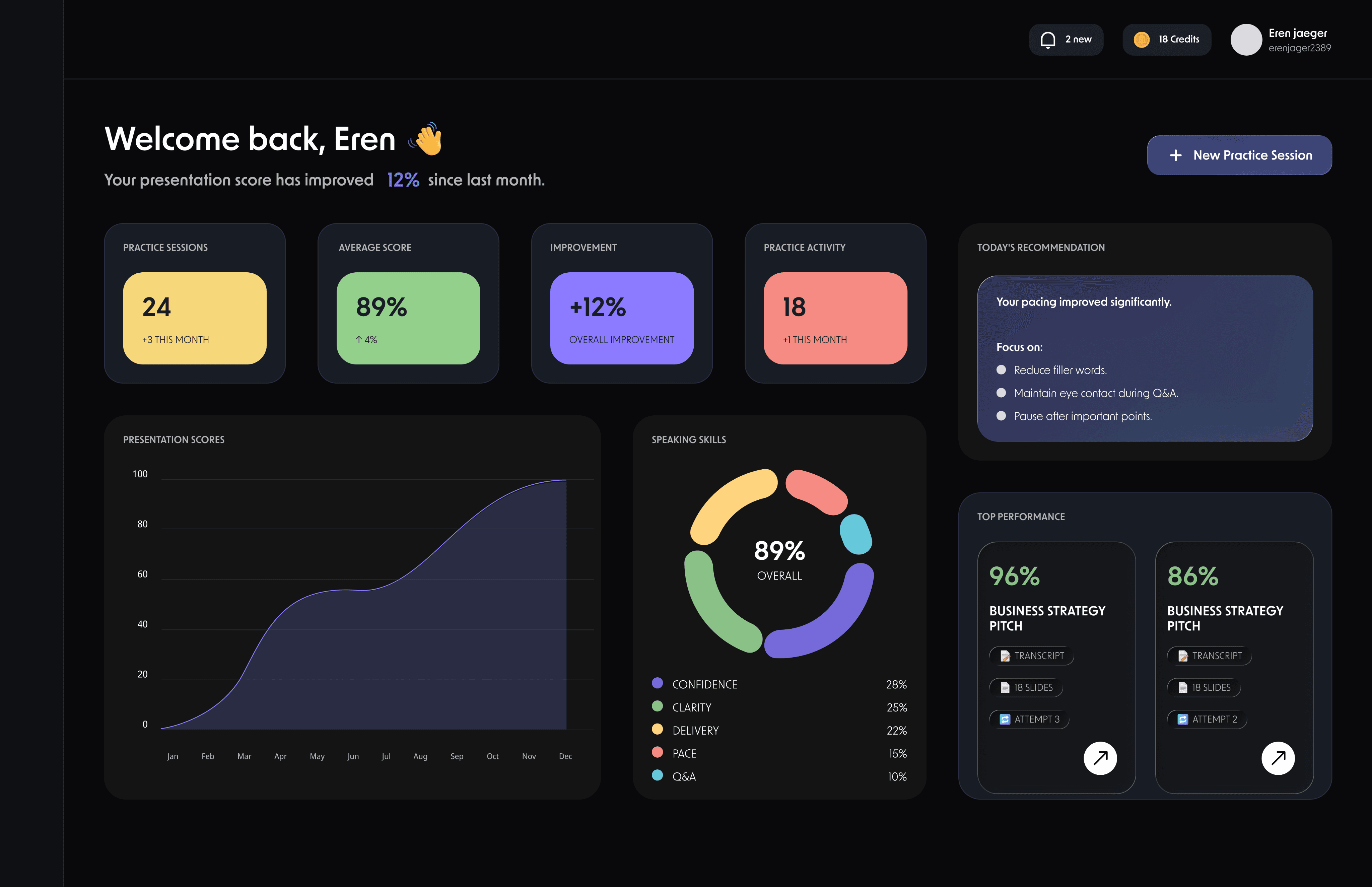
The interface was redesigned with a modern dark SaaS aesthetic to improve clarity, focus, and visual hierarchy. A consistent design system using New Order typography, subtle glassmorphism, and vibrant accent colors creates a clean, premium experience while keeping AI-powered interactions intuitive and reducing cognitive load throughout the exam creation workflow.
The interface was redesigned with a modern dark SaaS aesthetic to improve clarity, focus, and visual hierarchy. A consistent design system using New Order typography, subtle glassmorphism, and vibrant accent colors creates a clean, premium experience while keeping AI-powered interactions intuitive and reducing cognitive load throughout the exam creation workflow.
LOW Fidelity
LOW Fidelity

High Fidelity
High Fidelity
www.your-website.com
www.your-website.com